June 23, 2026
Ismaning, June 2026 - The iMEDCAP consortium proudly announces the successful completion of the live pilot demonstration of its autonomous tactical medical evacuation system at NATO's Vigorous Warrior 2026 exercise in Estonia, on 12 June 2026. The demonstration showcased a fully integrated chain of autonomous search, rescue, ground transport, in-transit treatment, and aerial evacuation for combat casualties.
The Challenge: Protecting the Golden Hour and Medics on the Battlefield
The conflict in Ukraine has underscored a critical challenge in modern warfare: as battlefield lethality increases, medical personnel are themselves becoming priority targets. The “Golden Hour” principle, which holds that survival rates improve dramatically when a wounded soldier receives advanced care within 60 minutes, is increasingly difficult to uphold.
The Solution: iMEDCAP
iMEDCAP (Development of intelligent military capabilities for monitoring, medical care and evacuation for contagious, injured and contaminated personnel) is a European Defence Fund project (Grant Agreement No. 101121421)funded in 2023 and led by the Technical University of Munich (TUM).The consortium comprises 24 partners from 9 nations, bringing together expertise in drone technology, robotics, sensor systems, data processing, software development, transport engineering, and military medicine.
The iMEDCAP system operates as a fully autonomous chain:
Phase 1: Search & Rescue
A thermal-imaging reconnaissance drone autonomously locates the casualty. A second drone equipped with millimetre-accurate radar technology then detects respiration, to confirm the casualty is alive.
Phase 2: Autonomous Ground Evacuation
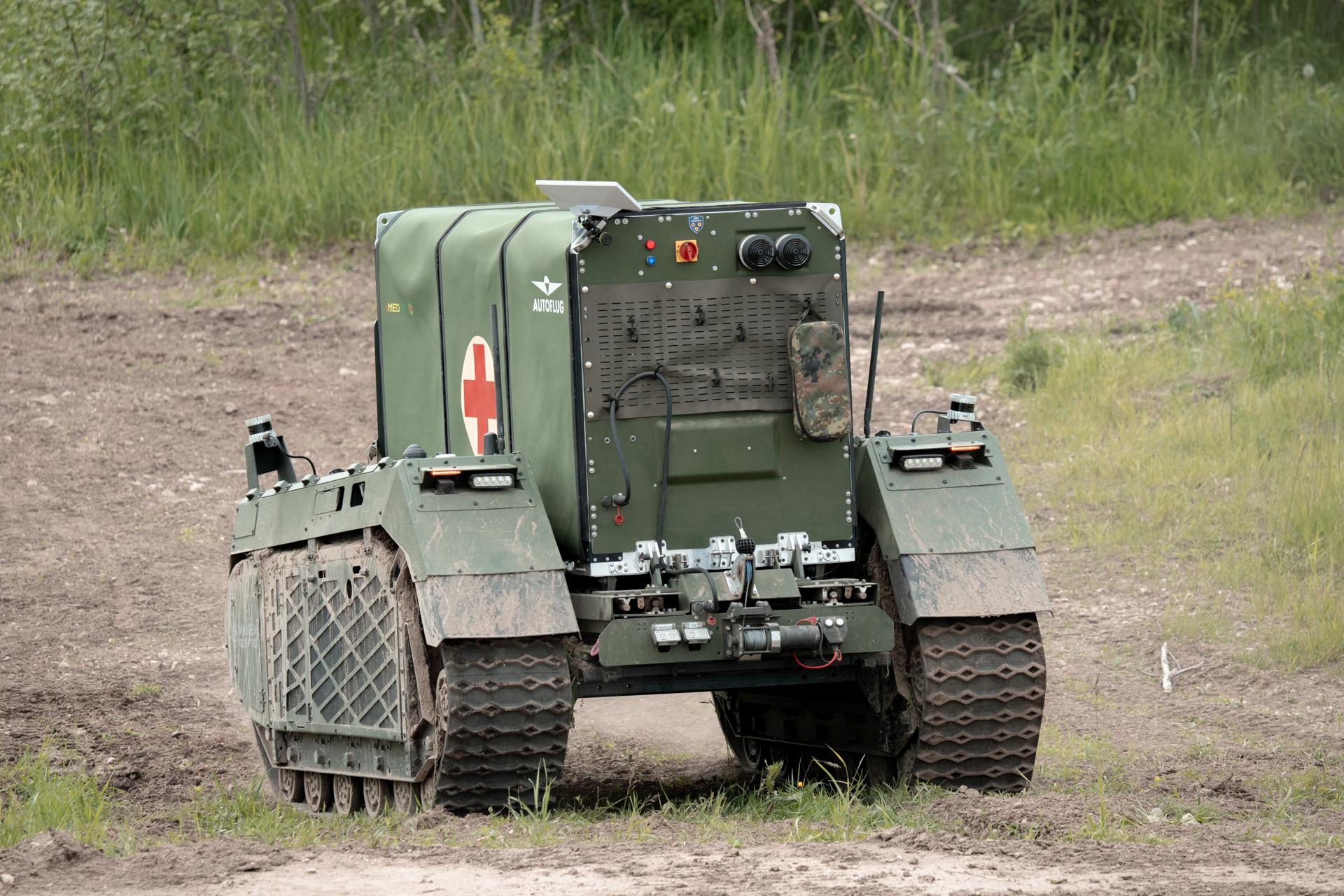
The THeMIS Unmanned Ground Vehicle (UGV), fitted with the iMEDCAP Autonomy Kit - comprising dual LiDAR sensors, an inertial measurement unit, satellite navigation antennas, and advanced navigation algorithms - autonomously navigates to the casualty. The system dynamically re-plans its route in real time using live reconnaissance data, maintaining navigation even when GNSS signals are blocked or jammed. The THeMIS Unmanned Ground Vehicle is equipped with a Patient Box
Phase 3: In-Transit Treatment
The iMEDCAP Patient Transport Box contains a set of sensors for the monitoring of the casualty, as well as an autonomous robotic arm system capable of administering autoinjectors, relieving tension pneumothorax, and applying a smart tourniquet remotely. Onboard sensors include a 3D body scanner, CBRN sensors, a diagnostic camera, a blood detector, and an eye movement sensor. All diagnostic data is relayed in real time to a remote physician, who must authorise any invasive intervention. Vital signs are also automatically transmitted to command and control elements and medical treatment facilities.
Phase 4: Aerial Continuation
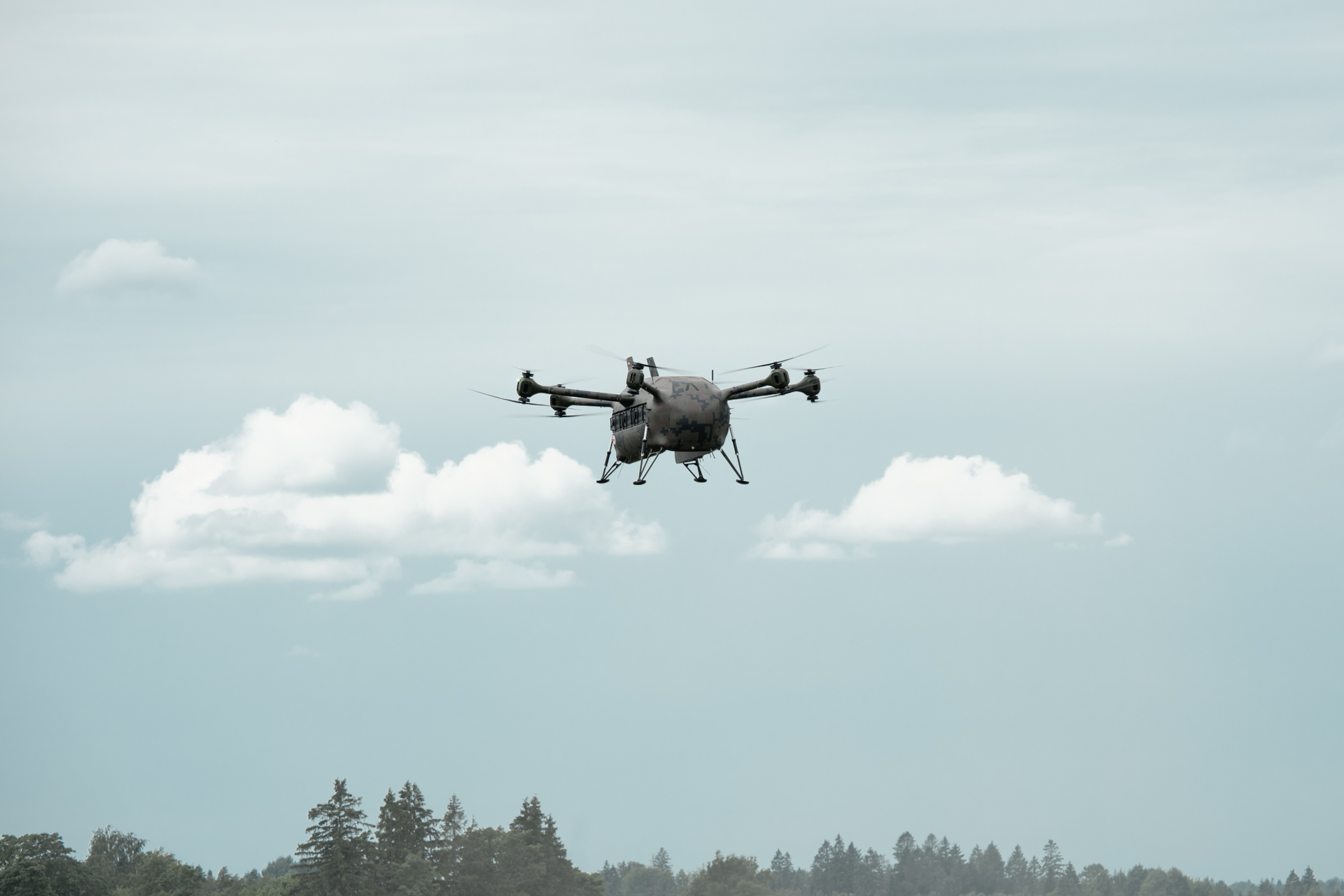
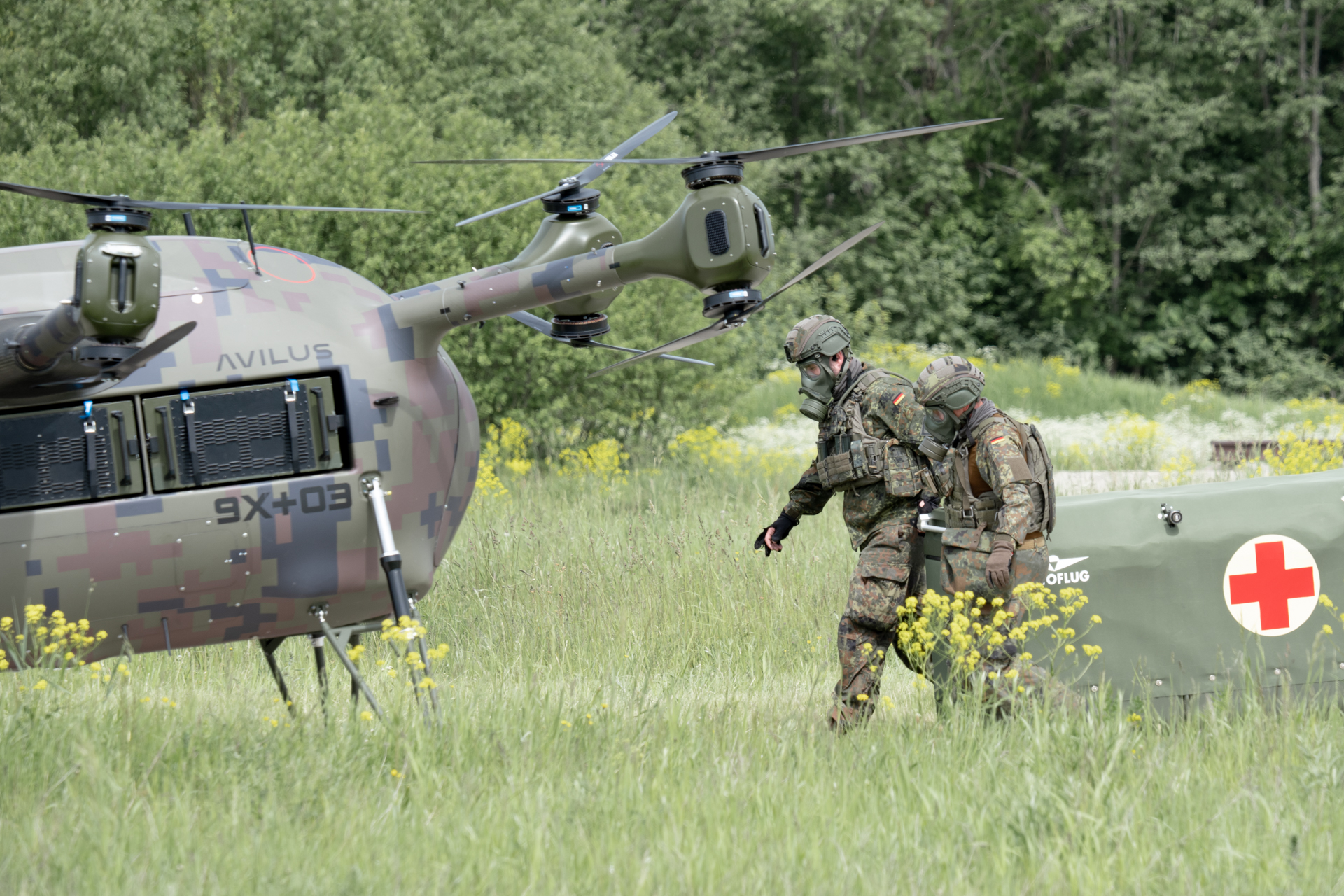
Upon arrival at the Casualty Collection Point (CCP),the patient transport box is transferred to the Grille UAV for aerial evacuation to the nearest medical facility. The Grille is electrically powered, carries a maximum payload of 175 kg, has a range of 50 kilometres, and can be deployed by two personnel in approximately 15 minutes.
About iMEDCAP
iMEDCAP is funded by the European Union under the European Defence Fund (Grant Agreement No. 101121421). The project unites 24 partners from 9 nations under the scientific leadership of the Technical University of Munich. Views and opinions expressed are those of the authors only and do not necessarily reflect those of the European Union or the European Commission. Neither the EU nor the European Commission can be held responsible for them.